
Centerville, OH · Garage Door Service
Garage Door Panel Replacement for Bellbrook Homes
Panel replacement for Bellbrook homes built around 1973, matched to older steel door sections and priced for a town with incomes well above the regional average.
- Repairs & new doors
- Springs & openers
- Serving 7 nearby communities
What the Fix Involves
Bellbrook's own housing stock centers on a median build year of 1973, which puts most garage doors here squarely in the steel-panel era that ran through the service area's 1960s and 70s boom. That matters because a dented or rusted-through panel on a door that age usually can't be ordered from the original maker anymore. The section has to be matched by profile, panel width, and often by hand-finding a close color rather than a factory match.
With median household income here running near $101,455 - well above the $78,598 average across the wider service area - a fair number of these doors have already had one upgrade: added insulation, a heavier gauge skin, or a steel overlay on what started as a plain single-layer panel. That changes the fix. We're not always swapping one section for an identical twin; sometimes we're matching a factory original to an upgraded neighbor panel, which means grinding fit on site rather than bolting in a stock part.
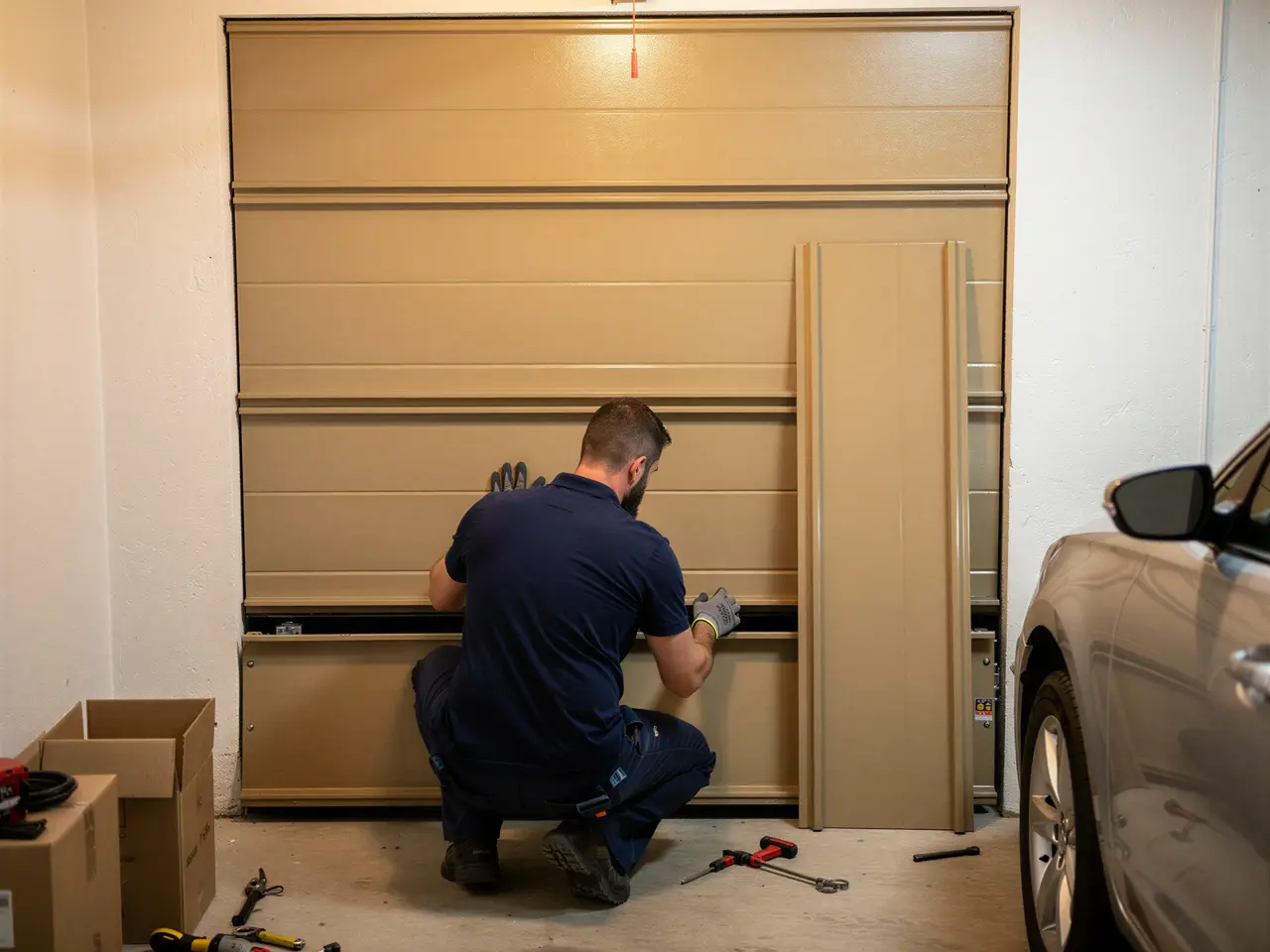
We pull the bad section, check the hinges and rollers it was carrying, and only replace what's actually damaged. A full-door swap isn't automatic just because a panel is bad - on a straight, true track, one section is often the whole job.
What It Costs
We don't have a stock price to post here, and anyone who quotes one over the phone without seeing the door is guessing. What drives the number on a 1973-era door is availability: if your door's manufacturer still makes a matching section, the job is a straightforward swap. If it doesn't - and after fifty years, a lot of them don't - we're sourcing a close match or refinishing a used section, and that's a different conversation.
Insulated panels, which show up more often in this income bracket than elsewhere in the service area, cost more to replace than a bare steel skin, simply because there's more material and a vapor barrier to deal with. Color-matching an existing door that's faded over five decades outdoors in a cold climate is also harder than matching a two-year-old door - sun and road grit don't fade panels evenly.
The honest limitation: if more than two sections on a four-panel door are damaged, or the track is bent along with the panel, we'll usually tell you replacement beats repair. Patching a door section by section past that point just moves the next failure down the road.
How Long You Are Without the Door
The truck comes from Centerville, a three-mile drive, so travel isn't what decides your timeline - the panel is. If your door's section is still in production, we can usually turn the job same visit once we've confirmed fit. If it's a discontinued profile from the 1973-to-1980s run that's common on this side of the service area, we're ordering a matched section, and that can mean leaving the door operable but cosmetically patched for a stretch while we wait.
We don't leave a door unsecured. Worst case, we brace the damaged section so the door still locks and runs safely on its track while the replacement part is in transit. That's not the same as being done, but it means your garage isn't open to the weather or to anyone passing by in the meantime.
We'll tell you at the first visit whether your panel is a same-day part or a special order - we don't like surprising anyone on timeline any more than on price.
What Causes It Around Here
The service area sits in a cold, severe climate band, and that shows up in panel damage two ways. First is straight cold-weather brittleness - steel that's been through decades of freeze-thaw cycles doesn't flex the way it did new, so a bump that would dent a newer panel can crack or buckle an older one. Second is corrosion along the bottom sections, where road salt and snowmelt collect at the base of the door and work through the seam over winters.
Beyond weather, the most common cause we see on doors from the 1973 era is simple contact damage - a mirror, a trailer hitch, or a bike rack clipping the bottom panel backing out of a driveway built for narrower cars than people drive now. Garages built in that period weren't always sized with today's trucks and SUVs in mind, and the panel takes the hit the house wasn't designed for.
None of that is unique to any one street - it's a function of the house's age and the weather it's weathered, which is why we look at the whole door, not just the dent, before we quote the fix.
Frequently asked questions
Will a new panel match the rest of my door?
On a door still in production, usually yes. On a door from the 1970s with a discontinued profile, we look for the closest match in gauge and finish, but an exact factory match isn't always possible after fifty years. We'll show you the options before ordering anything.
Do you carry panels on the truck for older doors?
We carry common current-production panels, but a lot of Bellbrook's doors date to the 1973-era stock that's no longer made. Those usually need a special order, which we'll confirm at the first visit rather than promise over the phone.
Is it cheaper to replace one panel or the whole door?
Depends on how many sections are damaged and whether the track is still straight. One clean section on a sound door is almost always cheaper to patch. Multiple damaged sections or a bent track usually tips the math toward full replacement.
More garage door services in Bellbrook
Book garage door service in Centerville
Call now or request a quote - tell us what the door is doing and where you are.