
Centerville, OH · Garage Door Service
Opener Installation for Centerville Homes Built 1938 to 2004
Garage door opener installation for Centerville, OH homes, mostly built 1938-2004, where cold winters strain aging drive systems and belts wear fast.
- Repairs & new doors
- Springs & openers
- Serving 7 nearby communities
Where This Job Goes Sideways
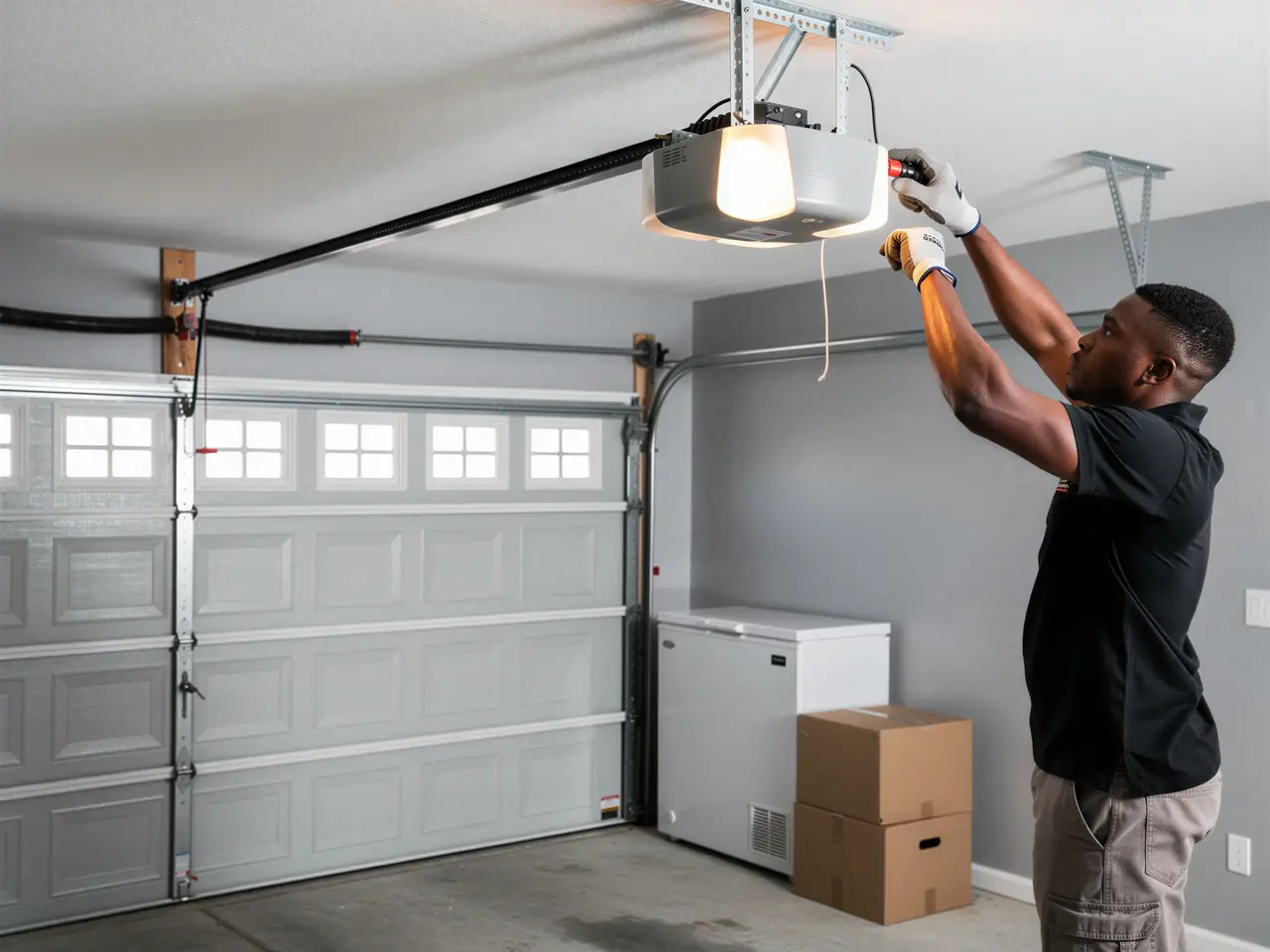
Most opener installs don't go bad because of the new opener. They go bad because of what's already in the opening. Centerville's housing stock runs from 1938 to 2004, with most of it going up through the 1960s and 70s, and that means the bracket, the header, and the track in front of you were sized for whatever chain-drive or belt-drive unit was common when the house was built - not for the opener you're bolting in now.
We see installs where the new opener's travel limits don't match a door that's been re-sprung or re-cabled once or twice over the decades. We see rail brackets mounted to headers that have shifted a quarter inch since Nixon was in office. None of that shows up until the opener is running and the door starts reversing on its own or binding two inches from the floor.
The fix isn't a different opener. It's checking the door itself - springs, rollers, track alignment - before the opener ever goes on the wall. Skip that step and you've just hung a smart problem on an old door.
What Causes It Around Here
Two things stack up in this area: house age and climate. With most homes dating to the 1960s and 70s, a lot of garages still have the original steel header and the original track spacing, neither built with today's heavier insulated doors or dual-sensor safety systems in mind.
Then the cold hits. This is a severe cold-climate zone, and that changes how grease, belts, and plastic gears behave. A belt that's pliable in July gets stiff in January, and an opener that was installed loose in the fall will chatter and skip teeth by February. Steel springs lose a little tension in deep cold too, which means an opener motor straining against a heavier-than-rated door is common here in a way it wouldn't be somewhere with mild winters.
Add it up and you get a specific failure pattern: openers that ran fine for a season or two, then start grinding, reversing early, or tripping the breaker once nighttime temperatures drop. That's not bad luck. That's a door and opener combination that was never quite matched, finally getting tested by the weather it has to run in.
The Symptom
The opener hums but the door doesn't move, or it moves an inch and stops. That's usually the motor fighting a spring or cable problem, not the opener itself failing. On older Centerville houses this shows up most in winter, when stiff hardware adds resistance the motor wasn't sized for.
Other common ones: the door reverses halfway down for no visible reason, the remote works from the driveway but not from inside the car, or the opener runs its full cycle but the light never comes on. Each of those points somewhere specific - safety sensor alignment, a dying capacitor, a worn drive gear - and none of them get fixed by just swapping in a new unit if the underlying cause is still there.
If the opener grinds loudly on a cold morning and then runs quiet once the garage warms up, that's belt or chain tension responding to temperature, and it's one of the clearest signs we see locally that an opener install didn't account for how hard the cold makes these parts work.
What It Costs
We don't have a flat number to put here, and we're not going to invent one. What we can tell you is what moves the price: whether the existing track, bracket, and header are reusable or need rework, whether your door has one torsion spring or two, and whether the opener you want has battery backup or smart-home features that add wiring.
One honest limitation: some belt-drive openers from the 1970s and 80s use rail systems that are long out of production. When we hit one of those, the repair path is replacement, not patching in a part that doesn't exist anymore - and that's a bigger job than a straight opener swap.
With 46,461 owner-occupied houses across this service area and a median household income of $78,598, we see a wide spread of jobs - some are a clean swap on a door that's been maintained, others involve bringing 50-year-old hardware up to a safe baseline first. We'll tell you which one you've got before we quote it, not after.
Frequently asked questions
Can I put a new opener on my old garage door without replacing the door?
Usually, yes. The opener and the door are separate systems. What matters is whether your springs, cables, and track are in good shape and rated for the opener's lift. On houses from Centerville's 1960s-70s building wave, that's the first thing we check, not the opener brand.
Why does my opener struggle more in winter?
Cold stiffens belts, chains, and lubricants, and steel springs lose a bit of tension in deep cold. In a severe cold-climate area like this, an opener that's only marginally matched to the door's weight will show it first on the coldest mornings, before it ever fails in warmer months.
How do I know if it's the opener or the door?
If the door is hard to lift by hand with the opener disconnected, the problem is the door - springs or cables - not the opener. If the door moves freely by hand but the opener struggles, strips the gear, or reverses early, the opener or its wiring is usually the cause.
Related services
By Neighborhood
Opener Installation across the Centerville area
We also handle opener installation in these Centerville-area suburbs.
Book garage door service in Centerville
Call now or request a quote - tell us what the door is doing and where you are.