
Centerville, OH · Garage Door Service
Weather Seals and Drafts in Centerville Garage Doors
Why Centerville's 1960s-70s garage doors let in cold air, what to check before winter, and what seal replacement really involves for this housing stock.
- Repairs & new doors
- Springs & openers
- Serving 7 nearby communities
What Is Going On
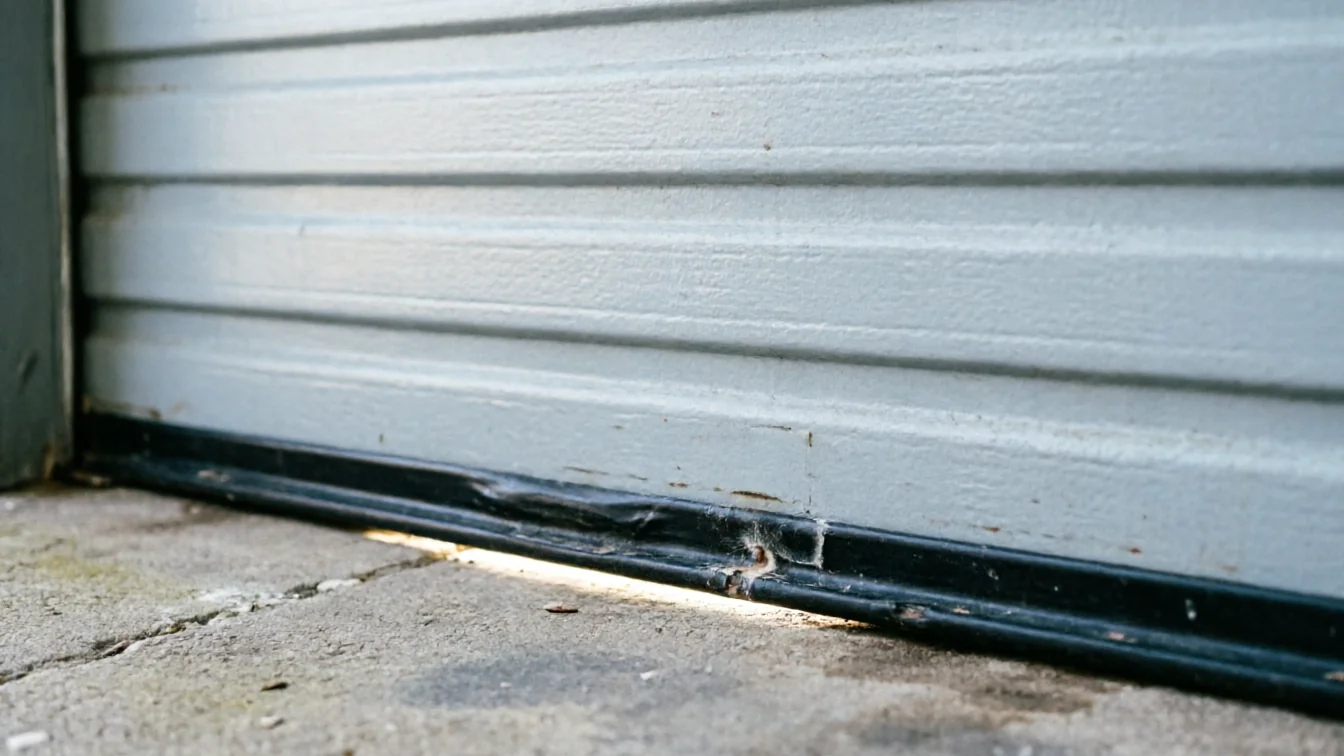
Most of the houses around Centerville went up between 1938 and 2004, with the median build year landing at 1973, and the bulk of that stock across the area's 27 named sections dates to the 1960s and 70s. That matters for drafts because the bottom seals, side weatherstripping, and threshold gaskets on doors from that era were built to a lower standard than what ships today, and a lot of those original tracks and jamb seals have simply aged out. You feel it as a cold line of air along the slab, a gap under the door you can see daylight through, or a seal that's gone hard and cracked instead of flexing. This isn't a sign anything is broken in the mechanical sense - the door still opens and closes fine. It's a sign the rubber and vinyl that used to block wind and moisture have given up, which in a cold-climate area is the difference between a garage that holds some heat and one that's basically outdoors. Houses built closer to the 1973 median are the ones we see this on most, since that's roughly fifty years of seal material doing its job before it finally quits.
What to Check
Start at the bottom seal - run your hand along the underside of the closed door on a cold morning. If you feel air moving or see light coming through at the corners, the astragal is shot. Next check the vertical seals along both sides of the frame; on older jambs these are often just a strip of vinyl stapled or nailed to wood trim, and once that trim has shifted or rotted even slightly, the seal can't close the gap no matter how new the rubber is. Look at the top seal too, where the door meets the header - it's easy to miss because you have to look up at it, but it dries out the same way the bottom one does. If your door has an older steel panel design, also check for rust or warping at the bottom panel edge, since that's where standing water and ice tend to sit longest in a cold-winter climate and it can keep a new seal from sitting flush even after replacement. None of this requires taking the door apart - it's a five-minute walk-around with a flashlight.
What It Costs
We don't have a flat number to give you here, and we'd rather say that than make one up. Seal replacement cost depends on the door width, whether the jamb trim needs repair before a new seal will sit right, and whether you've got a standard bottom astragal or something less common. What we can tell you honestly: on a lot of the 1960s-70s doors in this area, the seal itself is the cheap part - the labor is in dealing with decades-old trim and hardware that doesn't match current stock sizes. If your door and track are original to a house built near that 1973 median, expect the job to take longer than a straight swap on a newer door, simply because of fit work. Get an actual look at your door before you assume it's a quick fix.
How Local Conditions Play In
Centerville sits in a severe cold climate band, which means repeated freeze-thaw cycles every winter rather than one hard freeze and done. That cycling is what actually kills a weatherseal - it's not the cold itself so much as the seal flexing, cracking at low temperature, then softening and shifting as it warms, over and over across a season. On a door built to 1970s standards, that cycle happens on material that was never rated for today's temperature swings, so you lose the seal faster than you would with current-generation vinyl. The area's housing stock - mostly 1960s and 70s construction spread across 27 named sections - was largely built for a climate expectation that didn't account for how often that freeze-thaw cycle repeats now. If you're within a few miles of Centerville, in Bellbrook, Oakwood, or West Carrollton, you're dealing with the same cold band and similar-age housing, so the same draft pattern shows up there too.
Frequently asked questions
Why does cold air come in even though my garage door looks fine?
The door panel itself is usually solid - it's the seals around the edges that fail first. On houses built near the 1973 median age common in this area, those seals are decades past their design life even if the door and opener still work perfectly.
Can I just caulk the gap instead of replacing the seal?
Caulk doesn't flex with a door that opens and closes daily, so it cracks out fast and doesn't solve the problem. A proper seal is made to compress and release thousands of times; caulk is a patch, not a fix.
Will a new seal fix the cold in my garage completely?
It'll stop the draft at the door, but if your garage was never insulated - common in homes from the 1960s-70s era around here - you'll still feel the cold through the panel itself and the walls. Seal work and insulation are two different jobs.
Related garage door services in Centerville
More garage door guides
Book garage door service in Centerville
Call now or request a quote - tell us what the door is doing and where you are.