
Centerville, OH · Garage Door Service
Garage Door Repair for Centerville's Older Housing Stock
Centerville homes built between 1938 and 2004 wear out torsion springs fast in severe cold. Local repair, diagnosis, and honest pricing from Centerville Garage Door Pros.
- Repairs & new doors
- Springs & openers
- Serving 7 nearby communities
Where This Job Goes Sideways
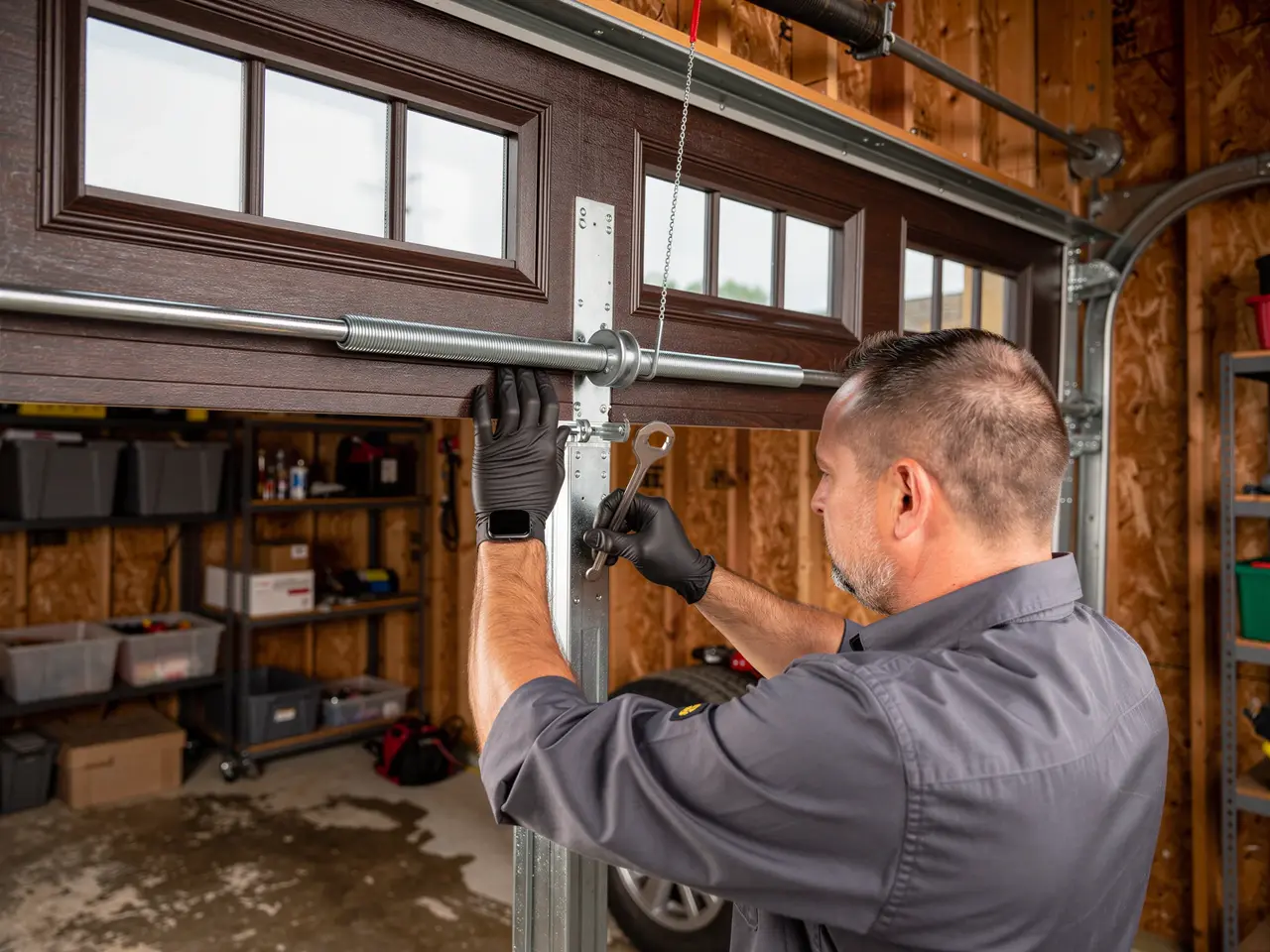
Most calls we get in Centerville start the same way: the door won't go up, or it goes up and slams back down. People assume it's the opener. Nine times out of ten it's the spring, and by the time you notice, it's already a two-person lift to get the door off the ground manually. The sideways part is this: homeowners try to force it, or they unplug the opener and crank the door by hand for a week, and that turns a $200 spring swap into a bent track or a cracked panel. Centerville's housing stock runs from 1938 up through 2004, with the median build year sitting around 1973. A lot of these doors are original, or close to it, meaning the torsion spring has been cycling for decades longer than it should. Once a spring goes, everything downstream of it - the cables, the drums, the opener gears - takes extra strain trying to compensate. That's where a simple spring job turns into a bigger bill if it sits too long.
What Causes It Around Here
Centerville sits in a climate band we'd call cold-severe, and that matters more than most people think. Steel springs lose flexibility as temperature drops, and the daily swing between a cold garage floor and a sun-warmed door skin puts repeated stress on the coil. Houses built in the 1960s and 70s - which make up a big share of what's in the 27 named areas across this service area - often have single-car or narrow double garages with springs sized for lighter, thinner doors than what's gone in since as owners upgraded. A spring rated for a 1973-era door working under a heavier insulated replacement panel is already undersized. Add 50 years of freeze-thaw cycling in an unheated garage and you've got metal fatigue showing up earlier than the spring's rated cycle count would suggest. We also see openers in this same housing stock that were installed decades after the door itself, which means the force settings were never recalibrated for the original hardware. That mismatch accelerates spring wear instead of just living with it.
The Symptom
The classic sign is a door that feels heavier than it used to, or one that opens about a foot and then the opener strains and stalls. Sometimes it's a loud bang from the garage - that's usually the spring itself letting go, not the opener. Other times it's quieter: the door creeps down an inch or two after you close it, which means the spring is still holding some tension but not enough. On older torsion setups common in Centerville's pre-1980s homes, you'll sometimes see a visible gap in the coil where it's separated. If your door has two springs and only one breaks, the door will usually still move, just unevenly and with a grinding or scraping sound as it tries to track straight. Don't run the opener through more than one or two cycles once you notice this - you're putting all the load on the opener's drive gear, which isn't built to lift a garage door's full dead weight on its own.
What It Costs
We don't have a flat number to hand you here, because the job changes with door weight, spring size, and whether one spring failed or the pair is at end of life together. What we can tell you is what drives the cost up or down: single spring versus double, standard torsion versus the older extension-spring setups still common in Centerville's mid-century garages, and whether the cable or drum got damaged when the spring went. A straightforward single-spring swap on a standard door is a same-day fix. If the opener's gear got chewed up from running against a broken spring, that's a second part to replace, and it's worth doing both at once rather than paying for a second call. Given a median household income of $78,598 across this area, we try to give you the repair option first and only recommend full door replacement when the door itself - not just the spring - is at the end of its life.
Frequently asked questions
How do I know if it's the spring and not the opener?
If the door feels unusually heavy when lifted by hand with the opener disconnected, or if you hear a loud bang before it stops working, that's almost always the spring. Openers fail quietly - they just stop responding. A spring failure is sudden and physical.
Why does this happen more in winter here?
Centerville sits in a cold-severe climate band, and steel springs stiffen and fatigue faster with repeated cold-to-warm cycling in an unheated garage. Combine that with decades-old springs common in homes built from the late 1930s through the early 2000s, and winter is when the weakest ones finally give out.
Can I just replace one spring if I have two?
You can, but we usually recommend replacing both if they're close in age, since the surviving spring is already worn from the same years of cycling and will likely fail within months. It costs less to do them together than to pay for two separate visits.
Is it ever better to replace the whole door instead of the spring?
If the door itself is original to a 1938-era home and the panels are rusted, warped, or the track is bent beyond adjustment, a new spring on a dying door isn't worth it. We'll tell you straight if that's the case instead of selling you a repair that won't hold.
Related services
Related guides
By Neighborhood
Garage Door Service across the Centerville area
We also handle garage door service in these Centerville-area suburbs.
Book garage door service in Centerville
Call now or request a quote - tell us what the door is doing and where you are.