
Centerville, OH · Garage Door Service
Garage Door Repair for Centerville's 1960s-70s Housing Stock
Torsion spring and opener repair for Centerville, OH homes built 1938-2004, where cold winters and original hardware wear out the same parts first.
- Repairs & new doors
- Springs & openers
- Serving 7 nearby communities
Where This Job Goes Sideways
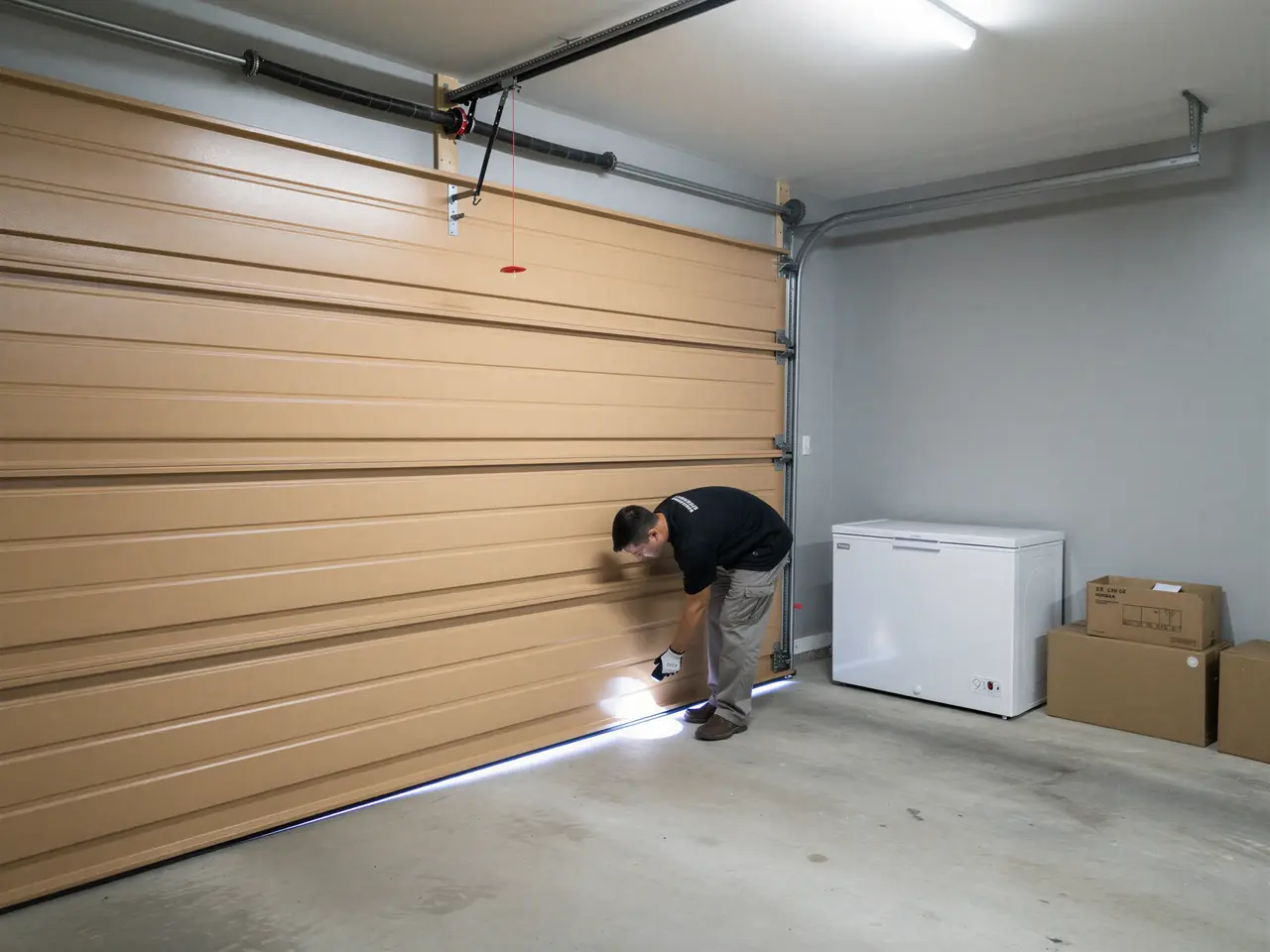
Most of the calls we get in Centerville start the same way: the door won't open, or it opens about a foot and stalls. That's almost always a torsion spring that's given out, not the opener. Homeowners call the opener company first because that's the part with the motor and the light, but the spring is doing the lifting and when it snaps or fatigues, the opener just burns itself out trying to compensate. Centerville's housing runs 1938 to 2004 with a median build year of 1973, and a lot of that 1960s-70s stock still has its original torsion hardware or a first-generation replacement from the 80s. That's 40 to 60 year old steel doing thousands of open-close cycles in a cold climate. It goes sideways when someone ignores a slow-closing door for six months, because by the time the spring fully fails, the cables and the bottom brackets have usually taken damage too. A same-day spring swap turns into a half-day job because now we're replacing cable, checking the drum, and re-leveling a door that's been racking itself on one worn hinge. Catching it at the slow-close stage is cheaper and faster, and it's the single biggest variable in how big this job gets.
What Causes It Around Here
Three things stack up in this area: age of the housing, the cold, and the fact that a lot of these houses never had their original hardware touched. Centerville's housing median is 1973, and across the wider Dayton-area service territory it's mostly 1960s-70s stock too, so the failure pattern repeats house after house. Cold climate matters because steel springs lose temper faster with repeated cold-to-warm cycling than they do in a mild climate, and this area sits in a severe cold band, not a mild one. Lubricant also thickens in cold garages, which raises the load on a spring that's already fatigued, and that's often the final push that snaps it. The other driver is simple neglect - torsion springs have a service life measured in cycles, not years, and a door that gets used twice a day for fifty years has done a lot more work than the same door in a house used as a weekend place. None of this is unique to one street. It's a function of when the neighborhood got built and what the winters do to steel, which is why the same fix shows up block after block.
The Symptom
Here's what it actually looks like from inside the garage. The door sags unevenly, dropping lower on one side as you watch it close - that's usually one spring still holding and one gone. You'll hear a bang from the garage, loud enough that people think something fell, and that's a torsion spring letting go under tension. The opener will strain, make a louder motor noise than usual, and the remote light might blink without the door moving at all. Some owners get an opener that opens the door but it immediately starts sliding back down - that's a dead giveaway the spring, not the motor, has lost its lift. If you try to lift the door by hand and it feels like dead weight instead of nearly weightless, don't force it. That's a spring doing none of its job, and the cables are under full load trying to compensate. We'd rather get a call for a loud bang than a call after someone's hand got near a cable under tension.
What It Costs
We don't have a flat number to put here that would hold up house to house, and giving you one before we've seen the door would be a guess, not a quote. What drives the number: whether it's one spring or two, whether cables or rollers got dragged into the failure, and whether the opener itself took damage from straining against a dead spring. A straightforward single-spring swap on a door caught early is the cheapest version of this job. A door that's been run for months on a failed spring, with worn cables and a stressed opener, costs more because there's more to replace. Given that median household income in this service area runs $78,598, most of what we quote falls into a range homeowners can plan for without it being a financial emergency - but we'll tell you the number on-site, after a look at the actual hardware, not over the phone.
Frequently asked questions
How old does a garage door spring usually get before it fails in Centerville?
Most houses here were built between 1938 and 2004, median year 1973, so a lot of original torsion springs are 40-plus years old. Spring life is really about cycle count, not calendar years, but in a severe cold climate the steel fatigues faster. By the time a spring is original and the house is from the 60s or 70s, we expect it's near the end.
Why does my garage door only open a foot before stopping?
That's a classic sign of one torsion spring still holding tension and the other gone, or both weakened enough that the opener can't lift the weight. Don't keep hitting the remote - it strains the motor and the cables. Call it in before the second spring goes too.
Is it the opener or the spring when the door won't lift?
Almost always the spring. The opener is a motor sized to assist a properly-sprung door, not to lift the door's full weight on its own. If the door feels like dead weight when you try to lift it by hand, that's the spring, not the motor.
Do you serve areas outside Centerville itself?
Yes - we cover the surrounding area including Bellbrook, Oakwood, West Carrollton, Miamisburg, Springboro, and the other nearby communities within roughly a 20-mile radius of Centerville.
By Neighborhood
Garage Door Repair across the Centerville area
We also handle garage door repair in these Centerville-area suburbs.
Book garage door service in Centerville
Call now or request a quote - tell us what the door is doing and where you are.