
Centerville, OH · Garage Door Service
What an Older Centerville Door Is Actually Dealing With
Centerville homes mostly date to the 1960s-70s, median 1973, in a cold-severe climate band. Here's what that means for your garage door and what to check before winter.
- Repairs & new doors
- Springs & openers
- Serving 7 nearby communities
What Is Going On
Centerville's housing stock runs from 1938 to 2004, but the median build year is 1973, and most of the 27 named areas around here filled in through the 1960s and 70s. That matters for garage doors because insulation standards for residential garage doors weren't common practice when most of these houses went up. A door installed alongside a house built in 1971 is very likely a single-layer steel or wood panel door with no foam core, on hardware sized for a lighter door than what's sold today.
Over decades, that uninsulated door has done its job of opening and closing, but the steel has usually thinned at the bottom panel from rust and impact, the rollers have worn grooves into the track, and the spring - sized for the original lighter door - has cycled tens of thousands of times past its rated life. None of this is dramatic. It shows up as a door that's gotten loud, that drifts when you let go of it, or that takes two tries on the opener. In a house from this era, that's not bad luck. It's just the age of the house catching up with the garage.
What to Check
Start with the bottom panel. On a door old enough to predate insulation rules, this is where moisture sits longest and rust eats through first - press on it with your palm and feel for give. Next, look at the spring. A torsion spring on a door this age has likely never been replaced, and a spring that's original to a 1970s installation is well past the point where you want to find out it's failing by having it snap.
Check the track alignment by watching the door travel through a full cycle - uneven wear from decades of use often shows as the door rocking slightly side to side instead of moving straight up. Listen for the opener motor straining harder than it should; original openers from this era, if they haven't been swapped, were not built for today's load ratings. Last, run a hand along the weatherstripping at the bottom and sides. On a house built before insulation rules were standard, there's often none at all, or what's there has hardened and cracked. That's a cheap fix and the first thing worth doing before winter.
What It Costs
I don't have set pricing to quote here, and giving you a number without seeing the door would be a guess, not a fact. What I can tell you is what drives the cost on a house like yours: an original 1960s or 70s door is often a non-standard size compared to what's stocked today, which means either a custom order or a repair rather than a straight swap. A spring replacement on an old, heavier door is usually more straightforward than full panel or opener work, since the spring itself doesn't care what decade the door was built in.
The honest call: if the bottom panel is rusted through and the door is original to the house, patching it is rarely worth the labor. At that point you're paying twice - once for the patch, once later for the replacement you were trying to avoid. A phone call and a look at the actual door is the only way to get a real number, not a range pulled out of the air.
How Local Conditions Play In
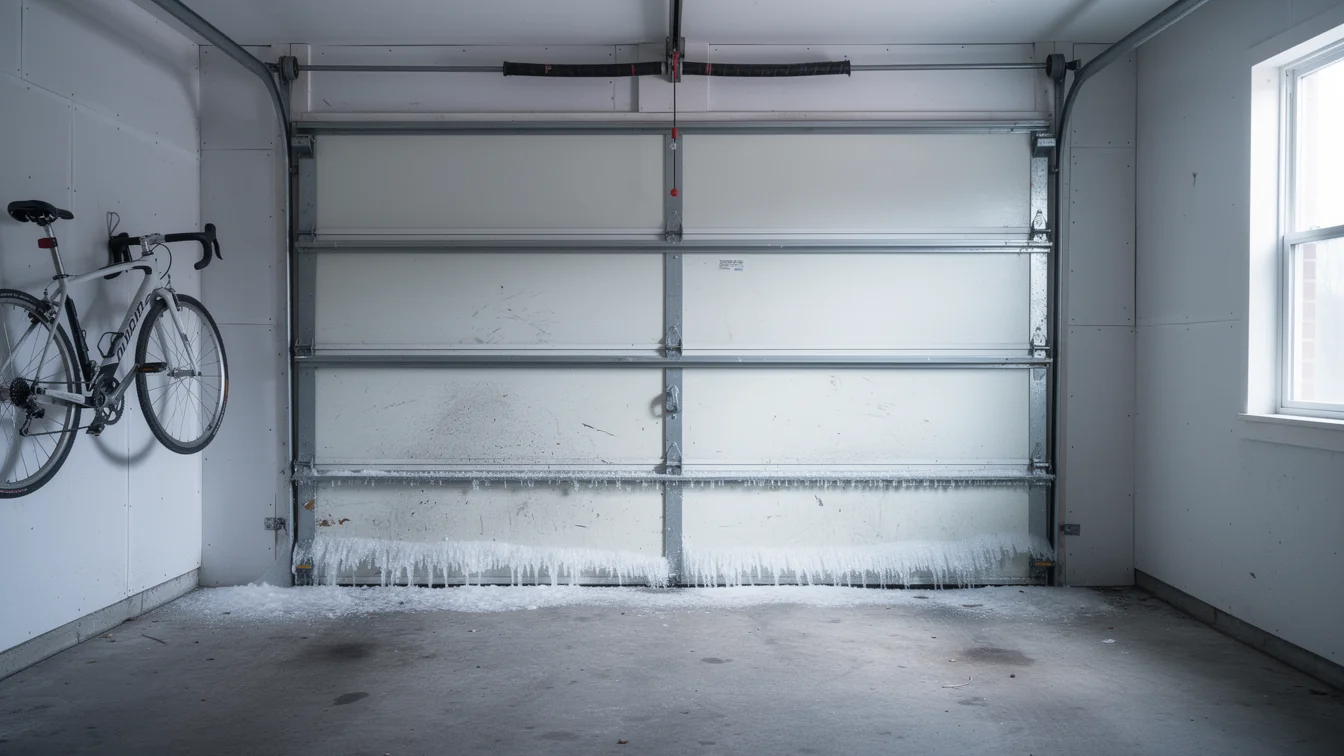
Centerville sits in a cold-and-severe climate band, which means the garage sees real freeze-thaw cycling every winter, not just an occasional cold snap. An uninsulated steel door from the 1970s has no thermal break, so the inside face sweats and frosts right along with the outside face - that moisture cycle is what eats the bottom panel and corrodes the spring coils faster than it would in a milder climate.
Across the service area, with 46,461 owner-occupied houses and a median household income of $78,598, a lot of homeowners are weighing a repair against a full insulated replacement right now, and the climate is part of that math - an insulated door pays you back more here than it would somewhere with a mild winter. Centerville is close to Bellbrook, about 3 miles out, and within 6 to 8 miles of Oakwood, West Carrollton, Miamisburg, and Springboro - towns built out in roughly the same postwar decades and facing the same door-age problem, for what it's worth if you're comparing notes with a neighbor on the other side of one of those lines.
Frequently asked questions
Is my garage door too old to repair?
Not automatically. A spring or roller swap works fine on an old door. But if the bottom panel is rusted through on a door original to a house built in the 1960s or 70s, a patch job is usually a short-term fix. We'd rather tell you that upfront than sell you a repair that doesn't last.
Why does my garage door sweat in the winter?
If it's an original door from this era, it's almost certainly uninsulated steel with no thermal break. In a cold-severe climate like ours, that lets the inside face frost and sweat right along with the outside temperature swing, which is part of why the bottom rusts out first.
Do I need to replace the opener too?
Not always, but an opener original to a 1960s or 70s installation was sized for a lighter, uninsulated door. If you upgrade to an insulated door, it's worth checking whether the old opener can actually handle the added weight before you assume it's fine.
Related garage door services in Centerville
More garage door guides
Book garage door service in Centerville
Call now or request a quote - tell us what the door is doing and where you are.