
Centerville, OH · Garage Door Service
Garage Door Roller Replacement for Centerville Homes
Rollers fail early in Centerville's 1960s-70s housing stock and cold winters. Here's why, what it looks like, and what drives the cost of fixing it right.
- Repairs & new doors
- Springs & openers
- Serving 7 nearby communities
Where This Job Goes Sideways
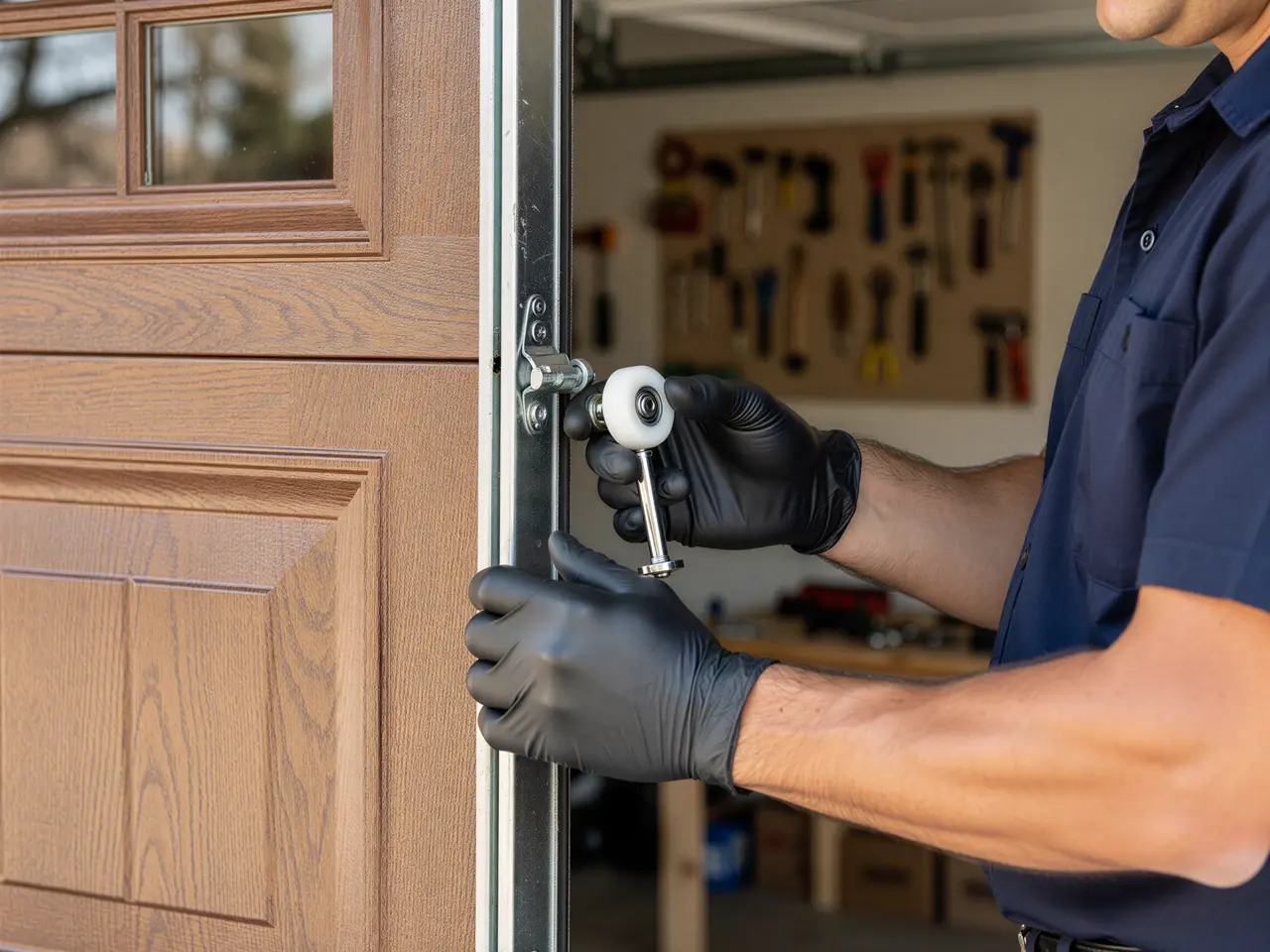
Roller replacement looks like a five-minute fix until someone pulls the wrong roller out of a loaded track. The door is under spring tension the whole time it's open, and a bent track or a roller that's seized in its hinge can let a panel drop faster than you'd expect. We see homeowners try to muscle a stuck roller free with a pry bar and end up bowing the track instead, which turns a $20 part into a track replacement.
The other way this goes sideways is timing. People wait until a roller is fully gone - wheel cracked off, just the stem riding in the track - before they call. By then the door has usually been binding and slamming on that corner for weeks, which stresses the opposite hinge, the opener's trolley, and sometimes the header bracket. Catching it when the rollers are just worn and noisy, not broken, is the difference between swapping four rollers and rebuilding one whole side of the door.
We also won't tell you to replace all ten rollers on a door where only the bottom two took the wear. If the rest are nylon and still round, they stay. Replacing parts that aren't failing just to round out the invoice isn't how we do the job.
What Causes It Around Here
Centerville's housing stock mostly went up between 1938 and 2004, with the bulk of it dating to the 1960s and 70s. Doors on houses from that era were commonly hung with steel rollers on steel tracks - no nylon, no sealed bearings - and plenty of those original setups are still in service decades later. Steel-on-steel rollers wear a groove into the track over time, and once that groove is there, every roller riding through it wears faster.
The cold is the other half of it. This area sits in a severe cold climate band, which means real freeze-thaw cycling every winter. Grease in an old roller bearing thickens in the cold and stops lubricating the way it should, so the wheel starts dragging instead of turning. Drag wears flats onto a round roller fast. Add in moisture that gets into the track overnight and freezes, and you've got a roller trying to turn through ice on a below-freezing morning - that's exactly the kind of stress that snaps a stem or cracks a wheel.
Houses built toward the newer end of that 1938-2004 range are more likely to already have nylon rollers, which hold up better in cold than steel, but nylon still ages out. None of this is a Centerville-specific design flaw - it's just what 50-to-80-year-old steel hardware does in a climate that freezes hard every winter.
The Symptom
Worn rollers announce themselves before they fail outright. The first sign is usually noise: a grinding or clicking as the door travels, worse at the point where a specific roller is flat-spotted or cracked. Next comes a jerk or hesitation in the door's movement, often at the same spot in the track every time, because that's where the bad roller is riding.
If you watch the door from outside while it runs, a failing roller will often show as a visible wobble in one corner - the panel doesn't travel smoothly, it hitches. On a cold morning this gets worse before it gets better, since the stiff grease and any ice in the track add resistance right when the metal is already contracted and tighter in the hinge.
The symptom to stop and call about is a roller that's visibly cracked, missing chunks of its wheel, or riding on bare stem metal. At that point the door is one cycle away from a roller coming out of the track entirely, which can let that corner of the door drop. Noise and hitching you can usually schedule around; a bare stem or a wheel in pieces, you shouldn't run the door until it's looked at.
What It Costs
We don't have a flat number to put here, because roller jobs vary by what's actually wrong. A straightforward swap of a few worn rollers on a door that's otherwise tracking true is a short job. It gets bigger once you add in a bent track section, a hinge that's rusted onto its roller stem, or a door where the wear is uneven enough that the whole set needs replacing to keep the door running true.
Material matters too. Steel rollers are cheaper up front but transmit more noise and wear tracks faster in cold weather; sealed nylon rollers cost more per unit but hold up better through winter freeze-thaw cycling, which is relevant in a severe-cold area like this one. We'll tell you straight if your track is worn enough that new rollers alone won't fix the noise - sometimes the honest call is a track job, not another set of rollers on a grooved rail.
If you want a number for your specific door, that comes from looking at it - roller count, roller type, and track condition all change the job. We're not going to quote a price sight unseen, because on an older door that's usually wrong in one direction or the other.
Frequently asked questions
How many rollers does a typical garage door have, and do they all need replacing at once?
Most residential doors run 8 to 10 rollers, two or four per hinge section depending on panel count. You don't need to replace all of them if only a few are worn - we check each one and only swap the rollers that are actually flat-spotted, cracked, or dragging, unless the whole set is the same age and wearing together.
Why do my rollers get noisy specifically in winter?
Cold thickens the grease inside the roller bearing, so the wheel drags instead of spinning freely. In a severe-cold climate like this area's, that drag combined with ice or moisture in the track wears a flat spot onto the roller fast, which is what you hear as the grinding or clicking.
My house is older - are original steel rollers worth replacing with nylon?
Often yes. A lot of the housing stock here dates to the 1960s and 70s, and doors from that era commonly shipped with steel rollers. Nylon rollers run quieter and handle cold-weather stiffening better, though they're not immune to wear - they just wear differently and more slowly in most cases.
Can a bad roller damage my opener?
It can. A roller that's dragging or flat-spotted makes the opener work harder to pull the door through that section, which adds strain to the trolley and motor over time. Fixing the roller early is cheaper than fixing a roller and an opener that failed because of it.
Related services
By Neighborhood
Roller Replacement across the Centerville area
We also handle roller replacement in these Centerville-area suburbs.
Book garage door service in Centerville
Call now or request a quote - tell us what the door is doing and where you are.