
Centerville, OH · Garage Door Service
Why a Door Goes Off Track in Centerville
Centerville's housing stock runs 1938-2004 with a median year of 1973, and the cold winters here work on worn track hardware in specific ways. Here's what actually happens.
- Repairs & new doors
- Springs & openers
- Serving 7 nearby communities
What Is Going On
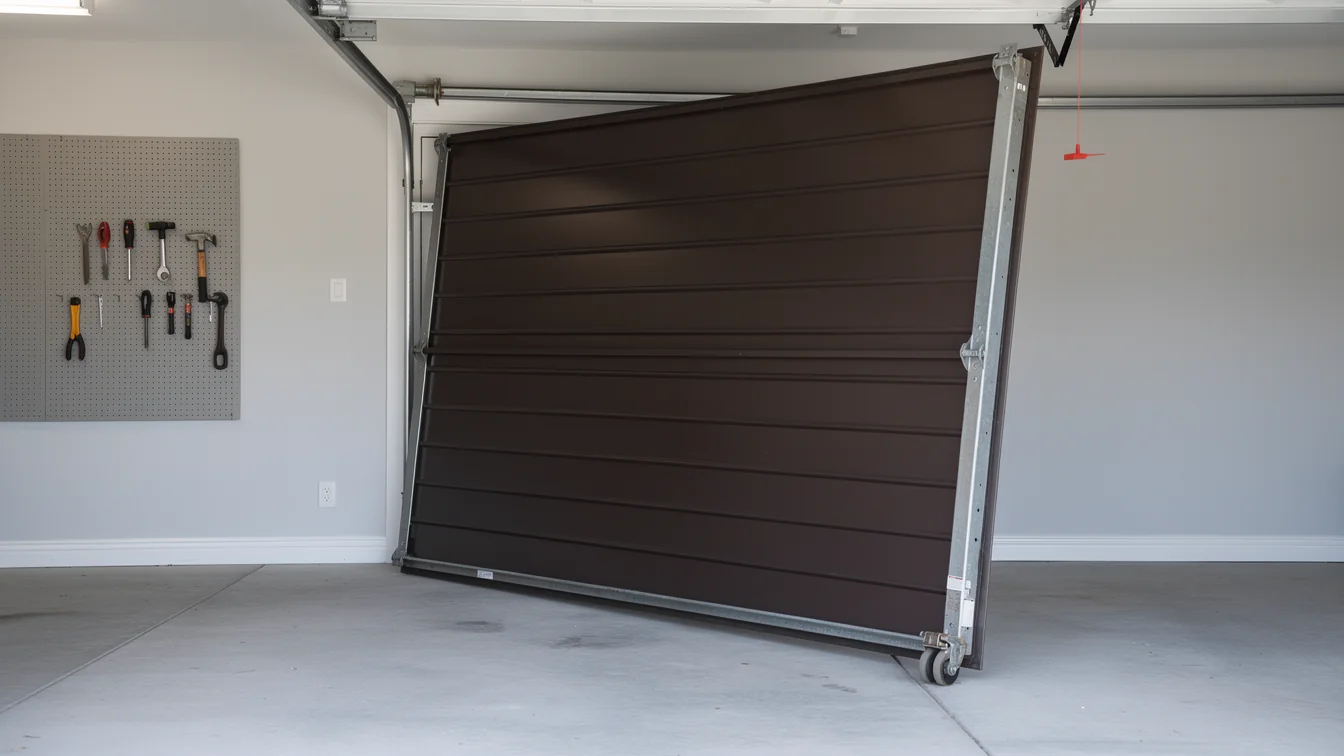
A door that jumps the track almost always started as something smaller: a roller worn down, a bracket that's loosened a half-turn at a time, or a cable that's stretched just enough to let the door sit crooked. Once the door is even slightly out of square, the rollers stop riding the center of the track and start grinding the edge. Keep running it that way and the roller eventually pops out, or the track itself bends from the sideways load.
In Centerville, a lot of this traces back to the age of the house. With housing here built mostly between 1938 and 2004 and a median build year around 1973, a large share of the doors and track systems in this area are original or close to it - meaning 40 to 50 year old steel track, brackets fastened to door jambs that have shifted slightly with the house, and hardware that was never designed for today's heavier insulated doors if a swap happened at some point. Track that's been fine for decades can still be a half-inch out of plumb, and that's enough to walk a door off its rollers under the wrong conditions.
It's rarely one dramatic event. It's cumulative wear meeting old hardware.
What to Check
Start at the bottom. Stand the door in the closed position and look at the gap between the bottom panel and the floor on both sides - if one side sits noticeably higher, the track on that side has likely shifted or bent. Next, check the brackets holding the track to the frame; on houses from the 1960s and 70s stock that makes up a lot of this area, those brackets are often original lag screws into jamb wood that's dried out over fifty-plus years, and they back out slowly.
Run your hand along the track (door closed, opener unplugged) feeling for a kink or a spot where the rails pinch together or splay apart - that's usually where the roller is catching. Look at the rollers themselves: nylon rollers crack and flatten on one side after enough cold-weather cycles, and a flat-sided roller will not track straight no matter how good the rail is.
If the door only jumps track at the very top or very bottom of its travel, that points to a specific bent section rather than general wear - worth knowing before anyone touches a wrench. One honest note: if the track is bent in more than one place, straightening it rarely holds. At that point replacing the section costs less in callbacks than re-bending steel that wants to spring back.
What It Costs
We don't have a flat number to put here that would hold up house to house - a single bent bracket is a different job than a track and roller set on a double-wide door, and we're not going to quote a price without seeing the door. What we can tell you is what drives the cost up: how many sections of track need replacing, whether the rollers are original steel (noisier, cheaper) or need upgrading to sealed nylon, and whether the opener has to come off the rail to do the work.
What keeps a job cheap is catching it at the roller-and-bracket stage, before the track itself is bent. Once a rail has a kink in it, you're buying new track, not just adjusting old track, and that's the point where a repair call turns into a parts order.
If you want a number, call and describe what you're seeing - a flat spot on a panel, a gap at the floor, a grinding noise when it opens - and we can tell you roughly what you're looking at before a truck shows up.
How Local Conditions Play In
Centerville sits in a severe cold climate band, and that matters for track problems more than people expect. Steel track contracts in cold weather, and on a door that's already slightly misaligned, that contraction is enough to pull a marginal roller the rest of the way off the rail - which is why off-track calls here cluster in the first hard cold snap of the season, not in July.
Cold also stiffens the nylon rollers and the grease in the hinges, so a door that rode quietly in September can start binding and catching by December, putting more lateral stress on the track right where it's weakest. On houses with original 1960s-70s hardware, that stiff cold-weather drag is often the thing that finally pushes a bracket loose enough to let the track drift out of alignment.
None of this means the door needs replacing every winter - most of it is adjustment and roller replacement, not a new door. But it does mean a track that looked fine in warm weather is worth a second look before the first freeze, especially on the older housing stock that makes up most of this area.
Frequently asked questions
Why did my garage door suddenly jump off the track this winter?
Cold contracts the steel track and stiffens roller hardware, which puts extra sideways load on a door that was already slightly out of alignment. In Centerville's severe cold climate, this is why off-track calls spike with the first hard freeze rather than happening evenly through the year - a marginal roller that held fine in warm weather gives out once the metal tightens up.
Is my house old enough that the track hardware is original?
It's possible. Housing in this area was built mostly between 1938 and 2004, with a median year around 1973, so a large share of homes still have original or near-original track and bracket hardware from that era. That doesn't mean it's bad, but hardware that old is worth checking for wear before it fails outright.
Can a bent track be straightened instead of replaced?
Sometimes, if it's one clean bend. If the track has more than one kink or has been bent and re-bent, straightening usually doesn't hold and the steel springs back out of shape within weeks. At that point replacing the bent section is the more reliable fix and ends up costing less in repeat calls.
How do I know if it's the roller or the track that's bad?
Run your hand along the closed track feeling for a pinch or gap - that's a track problem. If the track feels straight but a roller looks flat on one side or is cracked, that's a worn roller. Cold weather makes worn rollers fail faster, which is common on older hardware found across this area's housing stock.
Related garage door services in Centerville
More garage door guides
Book garage door service in Centerville
Call now or request a quote - tell us what the door is doing and where you are.