
Centerville, OH · Garage Door Service
Garage Door Repair for Waynesville's Late-1970s Doors
Waynesville's garage doors mostly date to the late 1970s, meaning extension-spring, single-layer steel setups. We cover repairs here from Centerville, 8 miles out.
- Repairs & new doors
- Springs & openers
- Serving 7 nearby communities
How Long You Are Without the Door
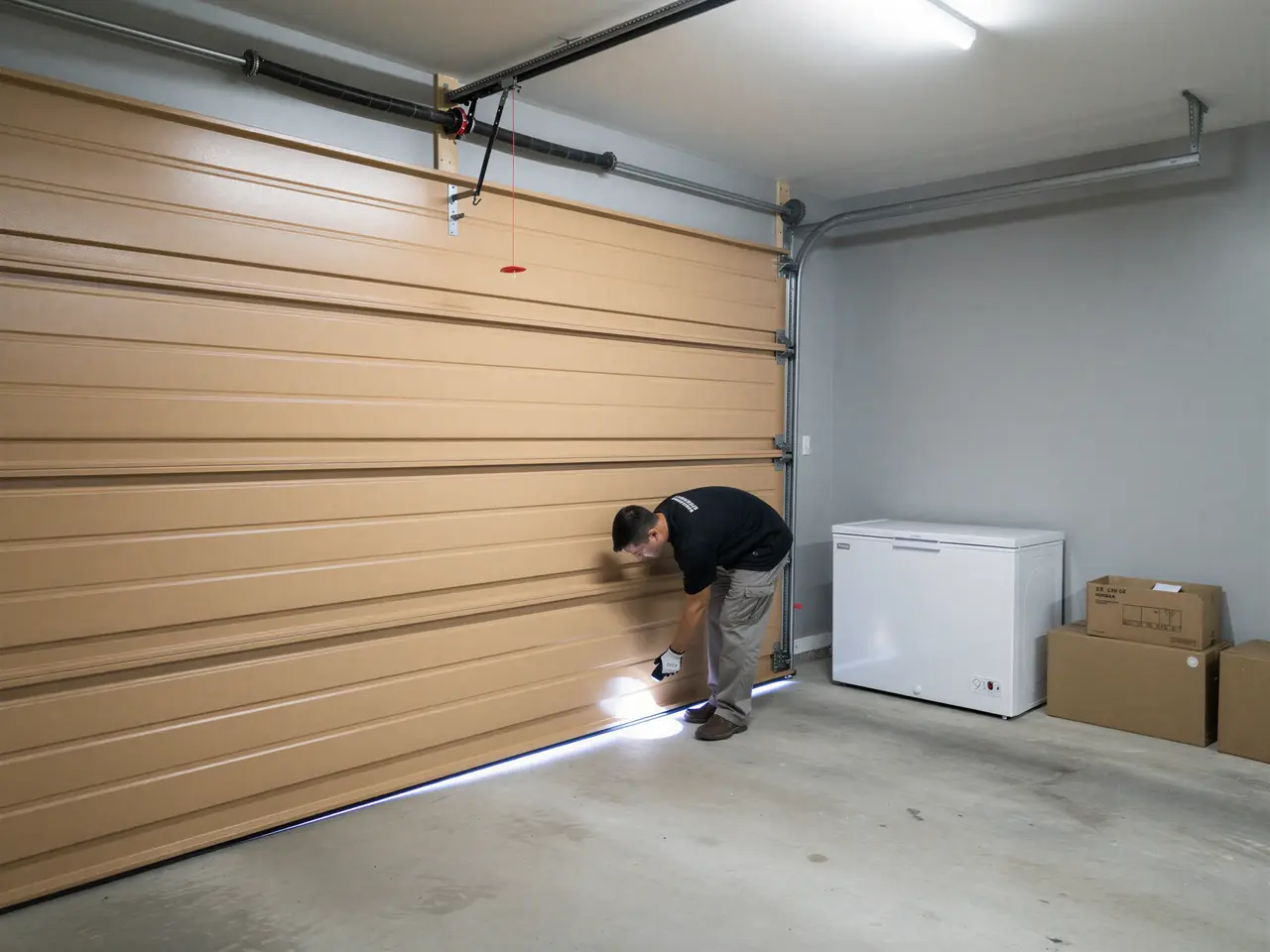
We run this job out of Centerville, 8 miles from Waynesville, so the first thing to know is that nobody is sitting on a truck in town waiting for your call. We schedule the drive in. A broken spring or a cable off the drum on a door built the way most Waynesville doors were built - single-layer steel on extension springs - is usually a same-visit fix once we're on site, because that hardware is simple and parts for it are common. What takes longer is anything involving a bent track or a section that's been painted over for decades and doesn't want to come apart clean. If your opener is a unit installed well after the house went up, the fix can be quicker than the door itself. We'll give you a real window when you call, not a guess, and we'd rather tell you two hours than promise one and miss it.
What Is on the Truck
Houses in Waynesville went up mostly around 1978, and that era points us toward specific parts before we even see the door: extension springs rather than torsion, lighter-gauge steel panels, and track hardware sized for a door that was never meant to carry a heavy insulated retrofit. We carry extension spring pairs in the common sizes, replacement pulleys and safety cables (code now requires a containment cable through extension springs - a lot of 1970s installs never got one added), and steel roller and hinge sets that fit older track spacing. We also carry weatherstrip and bottom seal stock, which matters more here than it might elsewhere because this area sits in a severe cold climate band and a gapped seal at the slab means a cold garage all winter. What we don't carry is custom-width panel stock for odd sizes - if your door was a non-standard order back in the day, that part may need to be special-ordered, and we'll tell you that on site rather than after we've started.
What It Costs
We don't post a price list for this page because the honest number depends on what's actually broken and what size door you have - a single extension spring swap is a different job than a full torsion conversion, and we won't quote one as if it covers the other. What we can tell you is what tends to drive the bill up or down in a town like Waynesville specifically: original 1970s-era extension spring setups are generally cheaper to repair than torsion systems because the parts are simpler, but if a prior repair mixed spring types or added a cable without the matching drum, that mismatch adds labor. We'll look at the door, tell you what's wrong, and quote before we touch anything. If a repair is going to cost close to what a new door runs, we'll say so plainly instead of nickel-and-diming a door that's done.
The Symptom
The complaint we hear most from this stretch of houses is a door that slams the last foot of travel instead of settling, or one that won't budge past half-open. Both usually trace back to the same cause: an extension spring that's lost tension or snapped clean, which is common once that spring hits its fortieth winter in a severe cold climate band where the steel gets brittle every season. A second common call is a door that reverses itself right after the opener engages - often the travel limit drifting on an opener added years after the original 1978-era door, fighting hardware it was never really matched to. Less common but not rare: a bottom seal that's cracked through and letting a visible gap at the slab, which shows up as a cold garage floor more than a door that looks broken. If your door is doing something else entirely, tell us exactly what when you call - the more specific the sound or the stall point, the less time we spend diagnosing instead of fixing.
How to Book
Call and describe what the door is doing - whether it's stuck, slamming, off track, or just making a new noise - and we'll get a technician routed out from Centerville. Because we're traveling in rather than stationed in Waynesville, it helps to have someone able to let us into the garage at the scheduled time rather than us working around an empty house. You can also check our coverage page for Waynesville for how we handle this area, or see the full range of repair work we do out of the Centerville shop on our main repair page.
Frequently asked questions
Why are Waynesville's garage doors different from newer suburbs?
Most houses here went up around 1978, which was still extension-spring territory for garage doors - lighter steel panels, springs mounted along the horizontal track instead of torsion springs over the header. That hardware is simpler to repair but ages differently than what you'll find in newer construction nearby.
Do you have a crew based in Waynesville?
No. We work out of Centerville, about 8 miles away, and drive in for every call. There's no local depot here, so scheduling a visit means working around travel time rather than a walk-in response.
Is it worth repairing a door this old instead of replacing it?
Often yes, if the panels and track are sound - extension spring systems from this era are usually cheaper to fix than full replacement. But if the door's been patched more than once or the panels are rusted through, we'll tell you straight when repair stops making financial sense.
Does the cold affect my spring here more than elsewhere?
This area sits in a severe cold climate band, and steel springs get more brittle with every hard freeze cycle. A spring that's been fine for years can snap suddenly on the season's first real cold snap, especially if it's original to a door built in the late 1970s.
More garage door services in Waynesville
Book garage door service in Centerville
Call now or request a quote - tell us what the door is doing and where you are.