
Centerville, OH · Garage Door Service
Garage Door Repair for Carlisle Homes
Garage door repair for Carlisle, OH, run out of Centerville, ten miles up the road. Built for the 1970s hardware that's common on this side of town.
- Repairs & new doors
- Springs & openers
- Serving 7 nearby communities
What the Fix Involves
Carlisle sits ten miles from our Centerville base, which changes how a call here actually runs. We're not driving across one neighborhood - we're loading the truck with everything we think the job needs before we leave, because turning around for a part costs real time on a ten-mile round trip. That means a tech who answers a Carlisle call does a fuller phone diagnosis up front: what the door is doing, what it sounds like, whether it's a double or single, before anything rolls.
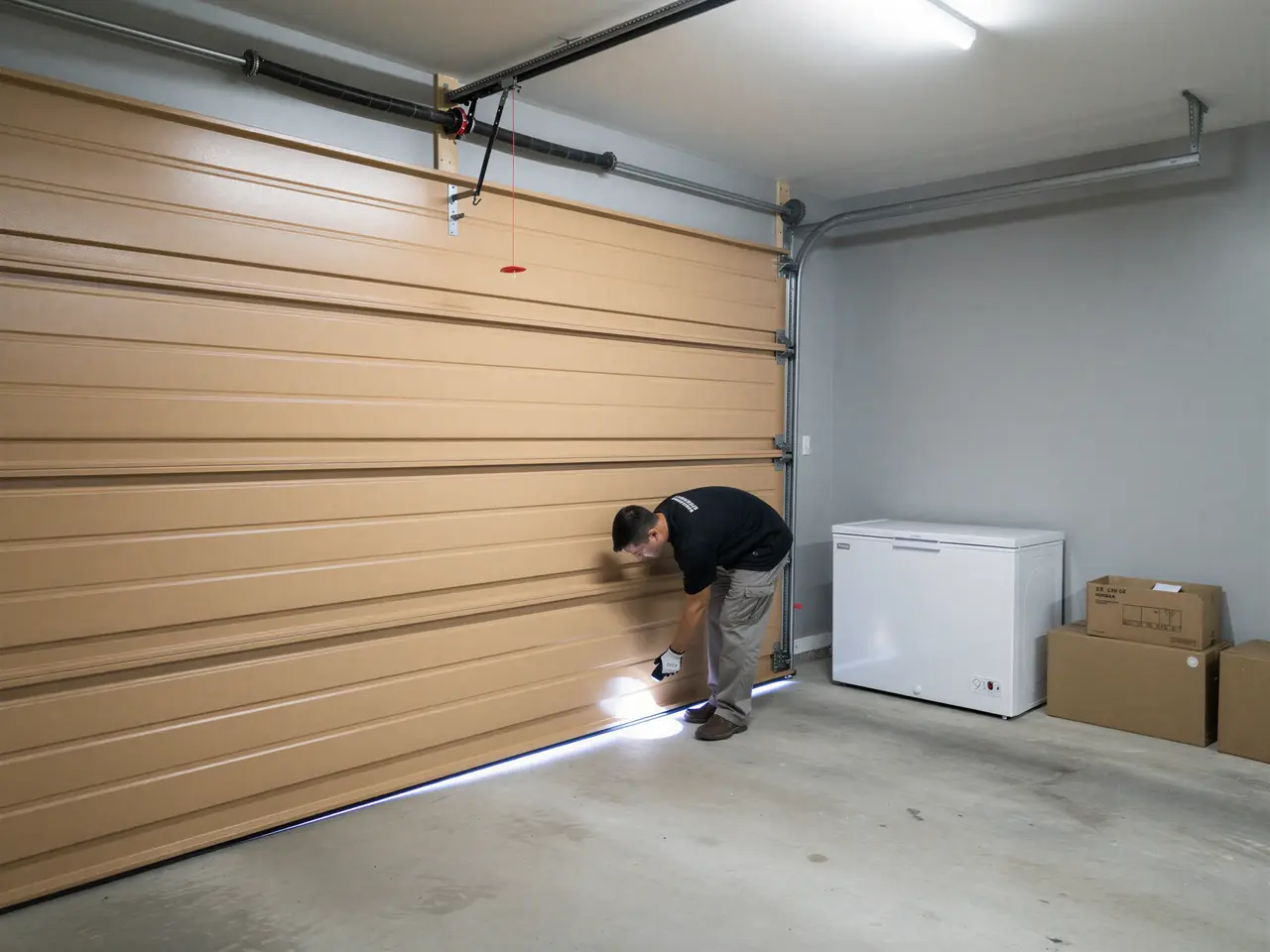
Once we're on site, the fix itself is ordinary trade work - broken spring, snapped cable, bent track, a sensor that's gone out of alignment, an opener gear stripped out. What's not ordinary is matching the hardware. Carlisle's housing stock centers on 1977, which means a chunk of the doors we touch here are original or close to it: steel sectional doors on torsion or extension springs sized for a lighter panel than what's sold today. We check the spring wire gauge and drum size before we quote a repair, because guessing on a 45-year-old torsion setup is how you end up back on site a second time.
Most calls end with the door repaired and tested through a full open-close cycle before we leave, not just eyeballed.
What Is on the Truck
Because the drive out to Carlisle isn't a five-minute hop, the truck carries a wider spread of torsion springs and extension spring pairs than we'd need for a job right around the corner from the shop - sizes that match the 1960s-70s stock common across this part of the service area, not just newer production doors. We stock standard-lift cable, several common drum sizes, and the sensor and hinge hardware that fails most often on doors from that era.
What we can't carry for every possible door is a full matched replacement panel. If a specific original panel is cracked or dented and the manufacturer stopped making that profile years ago, we're ordering it, and that's a lead time we tell you about on the phone, not after we've already made the trip. We'd rather say that up front than show up and discover the part doesn't exist in the truck.
For openers, we carry common drive gears, circuit boards for the major brands still in wide use, and remotes/keypads that pair with most existing systems. If your opener is old enough that the manufacturer no longer makes a matching board, replacement usually ends up cheaper than chasing discontinued parts - that's a call we'll make with you, not for you.
Can You Do This Yourself
Some of it, yes. Swapping a remote battery, resetting photo-eye alignment after a bump, tightening a loose roller bracket, lubricating hinges and track - all reasonable DIY on a Saturday morning. Replacing a torsion spring is not on that list. A door built to the 1977-era median around Carlisle is carrying spring tension sized for a heavier, thicker steel panel than most people expect, and a torsion spring under that load can cause a serious injury if it lets go while you're working on it.
Cables are the same story. A frayed cable under tension will whip when it snaps, and there's no safe way to inspect or replace one without unloading the spring first - which brings you right back to the same risk.
What's genuinely safe to check yourself: does the door reverse when something blocks the sensor beam, is the track visibly bent or full of debris, does the opener make a grinding noise before it stalls. Write down what you find and tell whoever answers the phone. It shortens the visit and sometimes changes the quote, because a grinding gear and a dead capacitor get fixed differently.
Where This Job Goes Sideways
The most common mistake we see on calls like this isn't a bad repair - it's a repair on the wrong part. Someone replaces an opener because the door won't lift, when the real problem is a broken spring putting the full weight of the door on the motor. The opener wasn't broken; it was being asked to do a job it was never built for, and it burned out trying.
The second way it goes sideways is cost-driven patchwork on an older door. With income levels in this area running lower than the broader Centerville service area, we understand the instinct to patch a cable or bend a bracket back by hand instead of replacing it outright. Sometimes that's the right call. Sometimes it isn't - a bent track that's been straightened once tends to bend again at the same point, and a second visit for the same fault costs more than doing it right the first time. We'll tell you honestly which situation you're in rather than upsell a fix you don't need.
The third: assuming a part off a newer door will fit a door from the 1970s. Drum sizes, cable gauge and mounting hole spacing shifted over the decades, and a part that's close enough by eye often isn't close enough to hold tension safely.
What Causes It Around Here
Winters in this part of Ohio fall into the severe-cold band, and that matters more for a door built around 1977 than for a newer one. Steel contracts in the cold, and on an older panel with worn weatherstripping, that contraction is enough to throw off the clearance between the door and the track - rollers start binding right when the temperature drops, which is exactly when people are using the door most, running the car in and out of a cold garage.
Temperature swings also stiffen torsion springs and dry out old lubricant on the shaft, so a door that worked fine in October starts groaning or sticking by January. That's a seasonal pattern tied to the age of the hardware, not a one-time event.
The other driver is simple wear accumulation. A door installed when the house was built, somewhere around 1977 for most of this area, has had roughly four and a half decades of daily cycles on its original springs, cables and rollers. None of that hardware is designed to last forever, and by this point most of it is well past any reasonable service life, cold weather or not.
Frequently asked questions
Do you have a crew based in Carlisle?
No. We run out of Centerville, about ten miles away, and cover Carlisle from there. That doesn't change the repair quality, but it does mean we build the truck's parts load before we leave rather than counting on a return trip for a missing piece.
Why does my 1970s-era door need different spring hardware than my neighbor's new one?
Doors from that era were often built with heavier steel panels than today's standard, so the torsion or extension springs were sized to match that weight. A modern replacement spring sized for a lighter door won't hold the same door safely - we check wire gauge and drum size before quoting.
Is it worth repairing a door this old or should I replace it?
Depends on what's failed. A spring, cable, or sensor is usually a straightforward repair regardless of door age. A cracked or badly dented panel on a discontinued profile can turn into a longer parts wait, and at that point full replacement is often the more practical option - we'll lay out both costs before you decide.
Will cold weather make my garage door problem worse before you get there?
It can. In this area's severe-cold winters, a binding roller or stiff spring tends to get worse, not better, as temperatures keep dropping. If the door is still operable, don't force it - call and describe what's happening so we can prioritize the visit correctly.
More garage door services in Carlisle
Book garage door service in Centerville
Call now or request a quote - tell us what the door is doing and where you are.